
LaSalle is named after Rene-Robert Cavalier de La Salle (1643-1687). He dreamed of creating a French fur trading empire in the Midwest. Born in France to a prosperous family, LaSalle took vows as a Jesuit, but was released from them when he failed to submit to the discipline of the order. La Salle came to North America in 1667 and began his apprenticeship in the fur trade. His success stemmed in large measure to his ability to make friends with members of various Native American tribes. In 1680, La Salle traveled to Illinois, and during the winter of 1682-1683 he established Fort St. Louis atop Starved Rock. The fort was needed because La Salle’s allies in the fur trade, the local Illinois, Miami and other Indians, were increasingly under attack by the Iroquois, who had been forced from their eastern homelands.
LaSalle is most famous for his voyage of exploration down the Mississippi River to the Gulf of Mexico in 1681-1682. He claimed all of these lands, later known as the Louisiana Territory, for France. A few years later, La Salle returned to the Gulf of Mexico, this time via the Atlantic Ocean. After two years fruitlessly searching for the mouth of the Mississippi River, he was killed by one of his own men in what is now east Texas. Despite this failure, this intrepid French explorer was one of the most dynamic characters to have passed through what is now Illinois.
The city of LaSalle’s street names reflect other dynamic characters who influenced the history of the area:
Henri de Tonty (1649 or 1650-1704) was born in France to Italian parents. He fought in several battles under Louis XIV, losing his right hand in battle. Tonty fitted himself with an artificial metal hand, and after coming to North America, he became La Salle’s trusted lieutenant. Tonty supervised the construction of Fort Crevecoeur, the first fort in Illinois, as well as Fort St. Louis atop Starved Rock. Tonty twice helped Illinois and other Indians fight off attacks from Iroquois Indians. After La Salle’s death, Tonty attempted to pursue La Salle’s dream of a fur trading empire, but increasing competition led to an overabundance of beaver pelts. Tonty dies of yellow fever in Alabama. One biographer noted that “La Salle conceived, but Tonty achieved.”
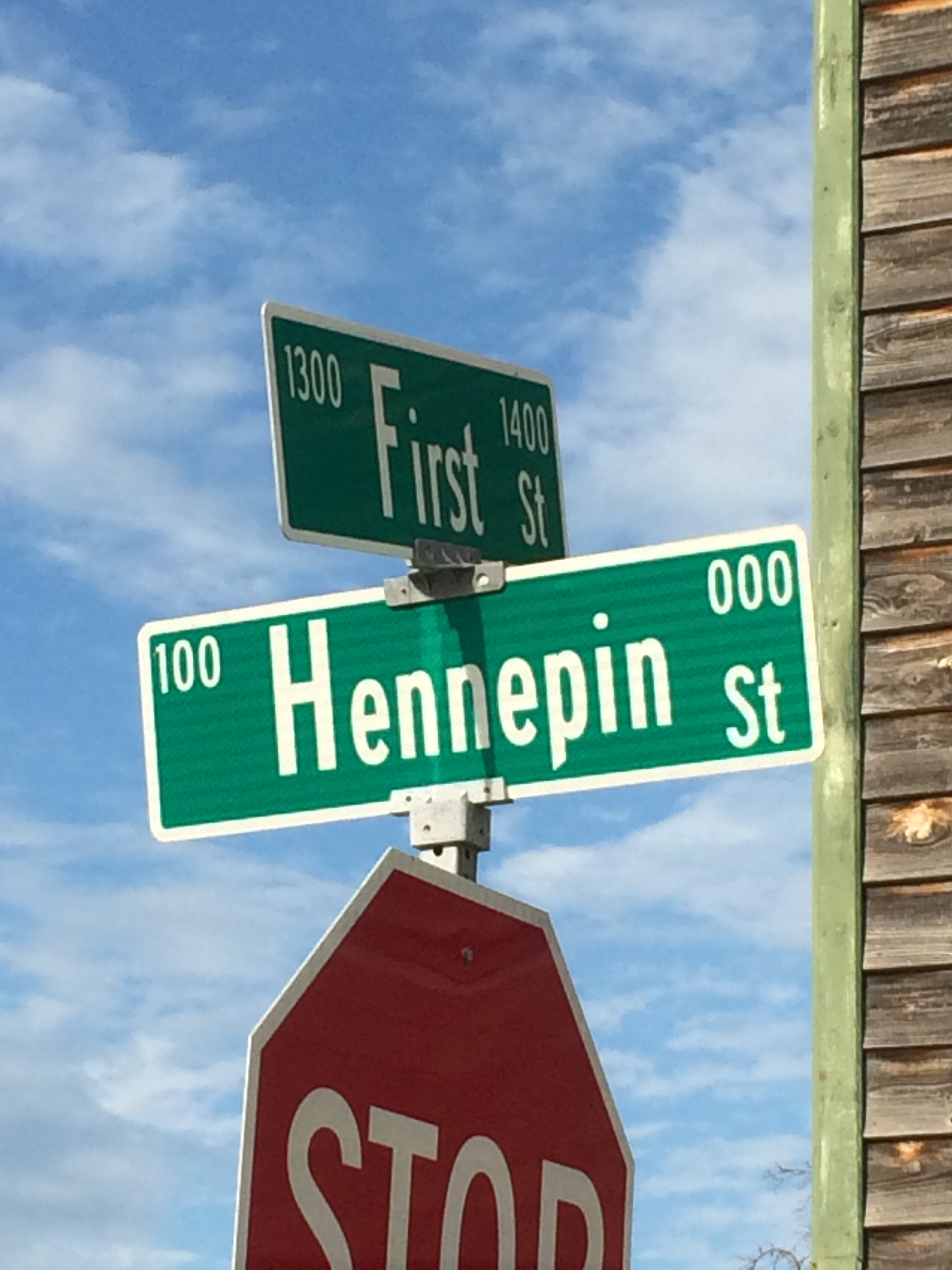
Louis Hennepin (1640-1705), explorer and author, was born in present-day Belgium, son of a butcher. He became a priest, expressing a desire to do missionary work in North America. He sailed to North America in 1675 aboard the same boat that carried La Salle. By 1680, Hennepin had begun exploring in what is now Minnesota, where he was briefly taken captive by the Sioux. Returning to France, he published an account of his travels that gained him widespread fame. However, Hennepin’s two subsequent books on North America were marred by errors and outright lies, and he died in obscurity. The Hennepin Canal, which extends from the Illinois River to the Mississippi, Illinois, bears his name.
William Gooding (1803-1878) served as chief engineer of the Illinois and Michigan Canal for twelve long years. His responsibilities and worries were enough to give a lesser man pause: coping with chronic shortages of supplies and manpower; estimating costs on 197 separate sections of the canal, as well as four feeder canals; seeing nearly all work on the canal cease for three years due to the State of Illinois’ virtual bankrupt condition; fighting off partisan political attacks on his reputation; and supervising hundreds of contractors and thousands of laborers. In the process, Gooding settled strikes, dealt with violent fights between canal diggers, and argued with contractors who bid low in order to the get the job and then asked for relief when they could not complete the job as promised.
Gooding’s salary of $3,500 per year, the largest in state government at the time, caused considerable jealousy. His nemesis, one Charles Oakley, accused him of favoritism and borrowing money from contractors. Shortly after the canal finally opened in 1848, Gooding’s moment of triumph was spoiled when he was fired as chief engineer. Later that same year, he received an appointment as Secretary of the Canal’s Board of Trustees, where he could thumb his nose at his former tormentors.
Benjamin Wright (1770-1842) was the most noted canal engineer of his day. He made his reputation as one of the chief engineers on the Erie Canal, and served in the same capacity on the Chesapeake and Ohio Canal. Wright came to Chicago in October of 1837 at the request of the Illinois and Michigan Canal Commissioners, who were trying to sort out differing cost estimates supplied by Gooding and Bucklin. Wright confirmed his support of Gooding’s deep cut plans. Wright earned the title, “Father of American Civil Engineering.”
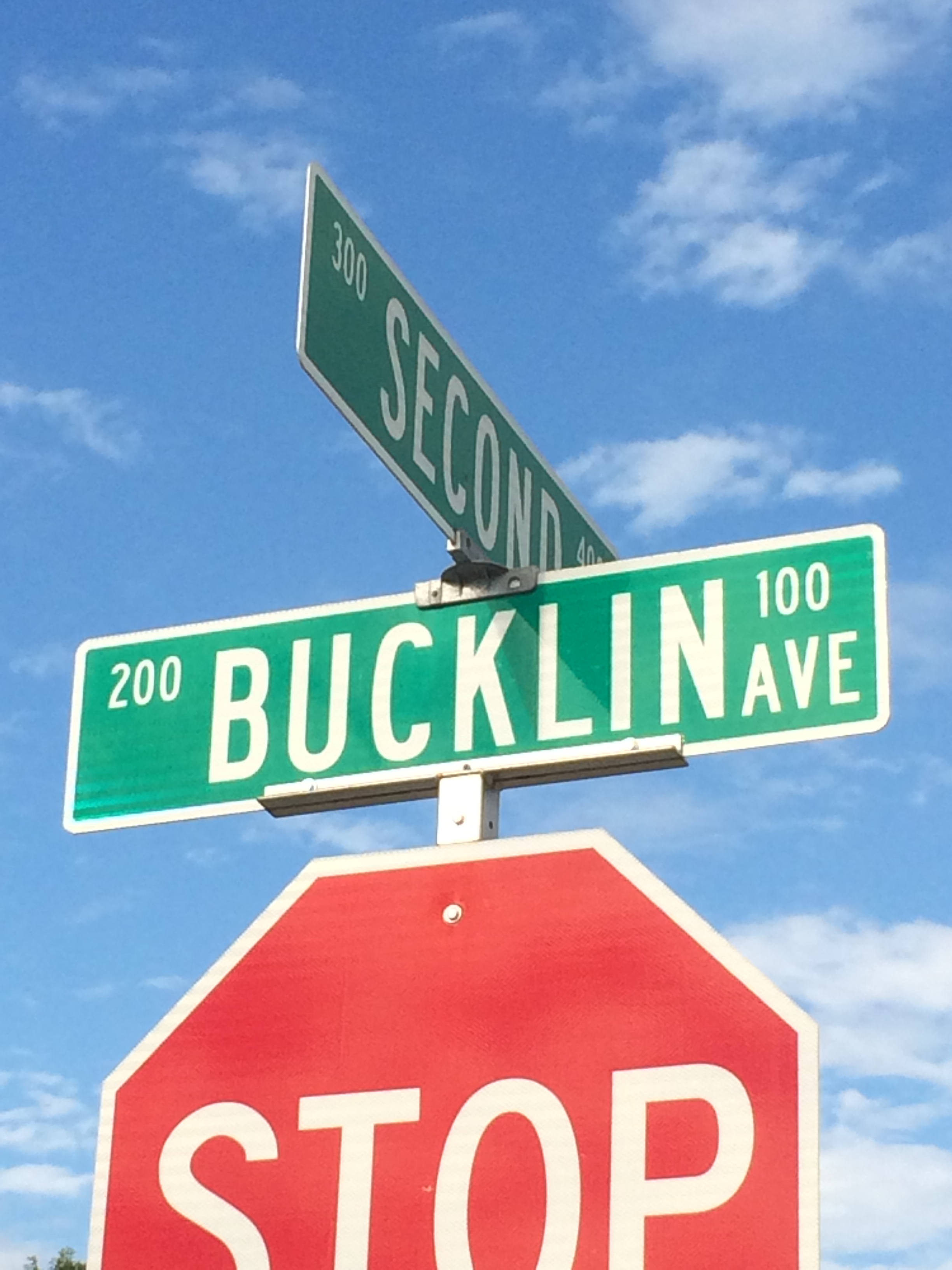
James M. Bucklin, an engineer, surveyed the route of the Illinois and Michigan Canal in 1830, having previously worked on the Miami and Erie Canal in Ohio. After studying other aspects of the I&M Canal for the Canal Commission, in 1833 Bucklin wrote that “nothing could justify” the building of the I&M canal. Aside from many obstacles to be overcome, especially that of water supply, Bucklin concluded that a railroad would be cheaper and more practical. Based on Bucklin’s report, the Canal Commissioners did an about face and recommended that a railroad, not a canal, be built instead. Eventually the canal prevailed.